Kathleen Bomani: What the Fiber Remembers
27. September 2026 – 15. November 2026
What the Fiber Remembers is the first institutional solo exhibition of Tanzanian artist Kathleen Bomani, born in Dar es Salaam, raised in Philadelphia, and based in Berlin. Working across film, sculpture, sound and research-led installations, Bomani explores the ecological, political, social and spatial entanglements produced through the movement of plants, people and power. Drawing on archival research, personal memory and embodied knowledge, her practice examines how landscapes and built environments preserve the afterlives of colonial infrastructures and architectures of memory.
The exhibition takes as its starting point the material history of sisal, a plant that was transferred through colonial botanical networks from the Yucatán Peninsula to East Africa, where it was cultivated within plantation systems under German colonial rule. Bomani follows the plant from agave to fibre and rope, and onward into carpets and industrial commodities. Sisal is not treated simply as a raw material, but as a material that carries history: of labour and exploitation, migration and global trade, as well as personal memories and contemporary lived realities.
The exhibition also asks what materials can remember, and how histories can be transmitted beyond the archive. Fibres and ropes become a connecting motif, both materially and conceptually. They link places, times and bodies, revealing how closely colonial violence, labour, infrastructure, ecology and forms of resistance are intertwined.
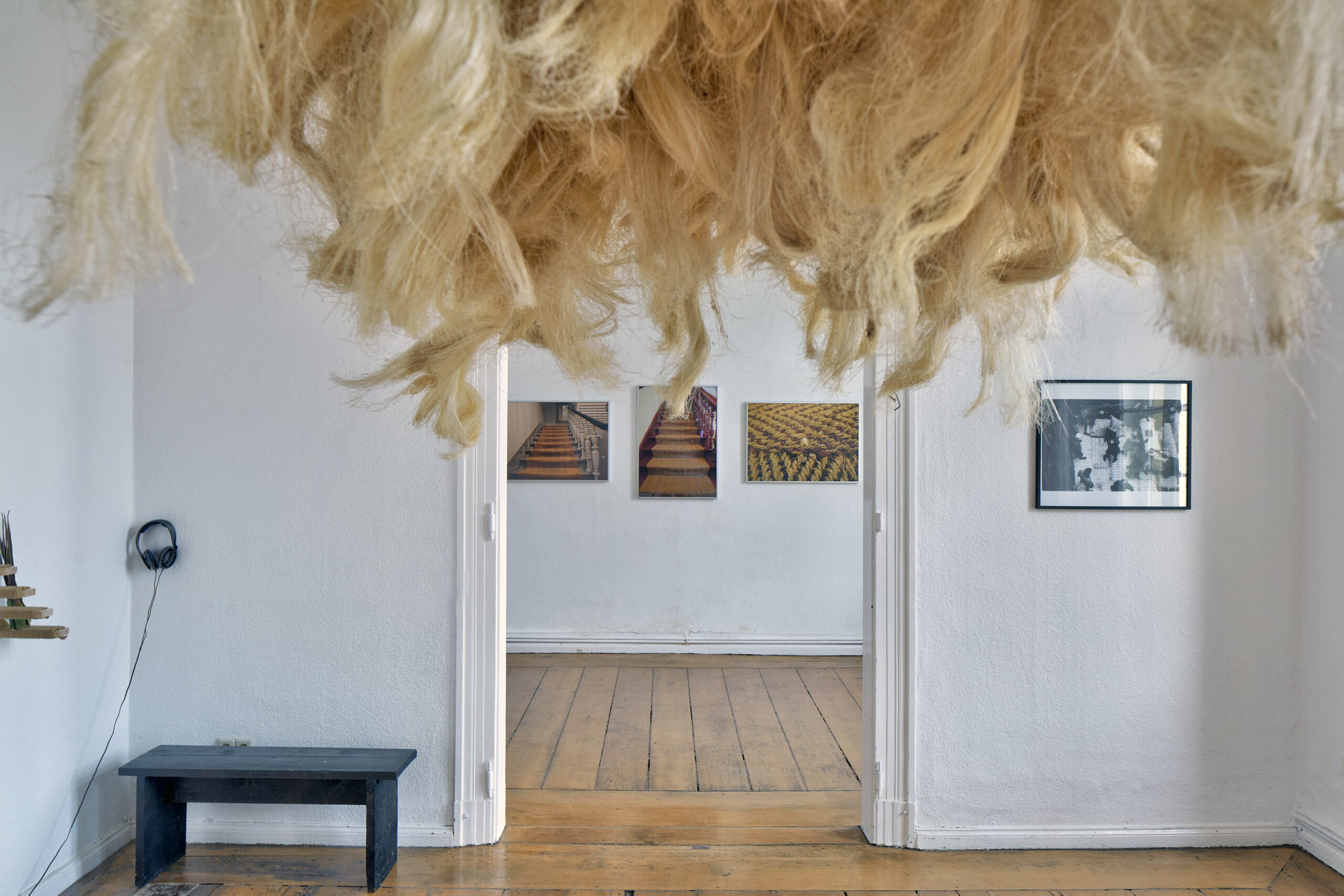
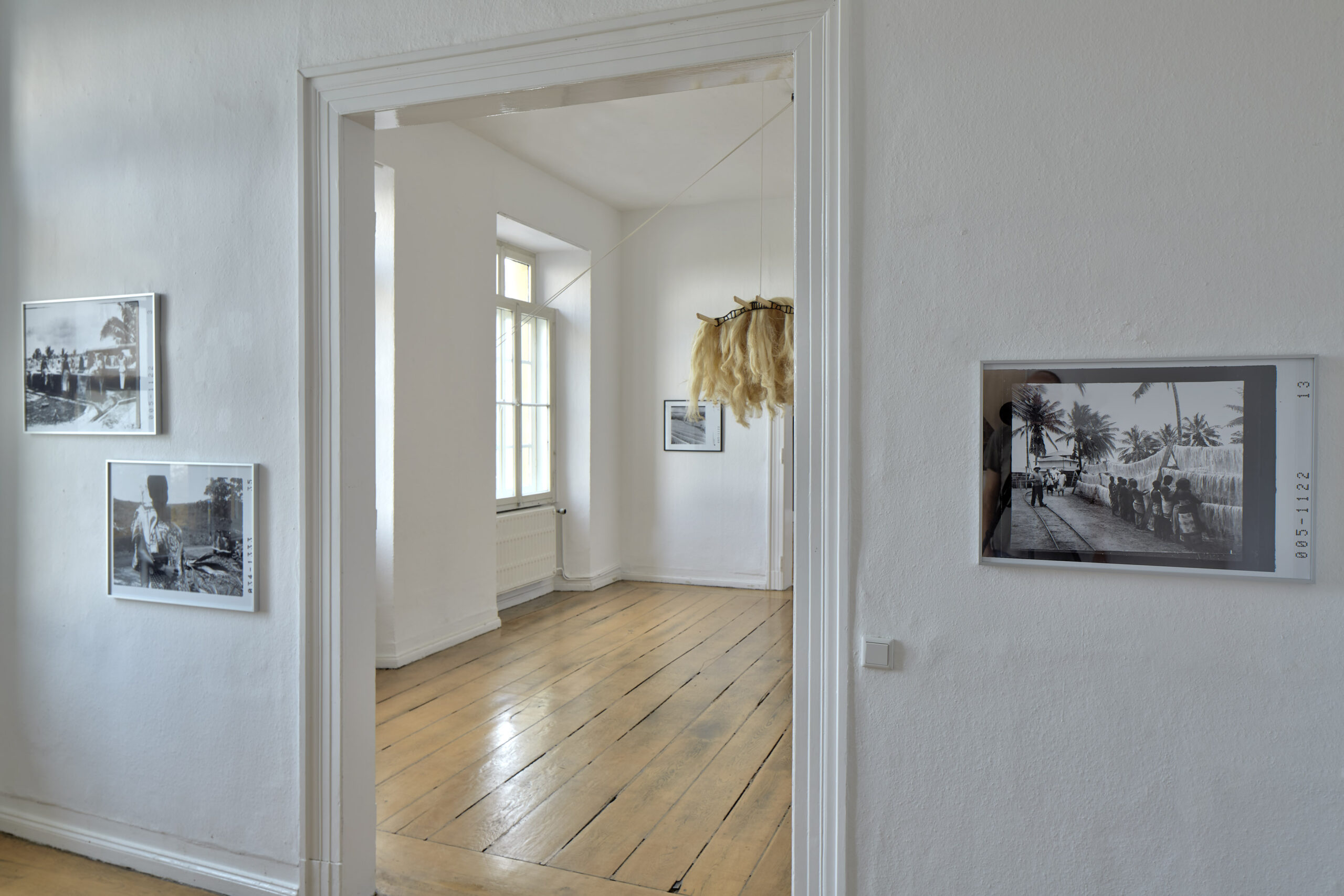
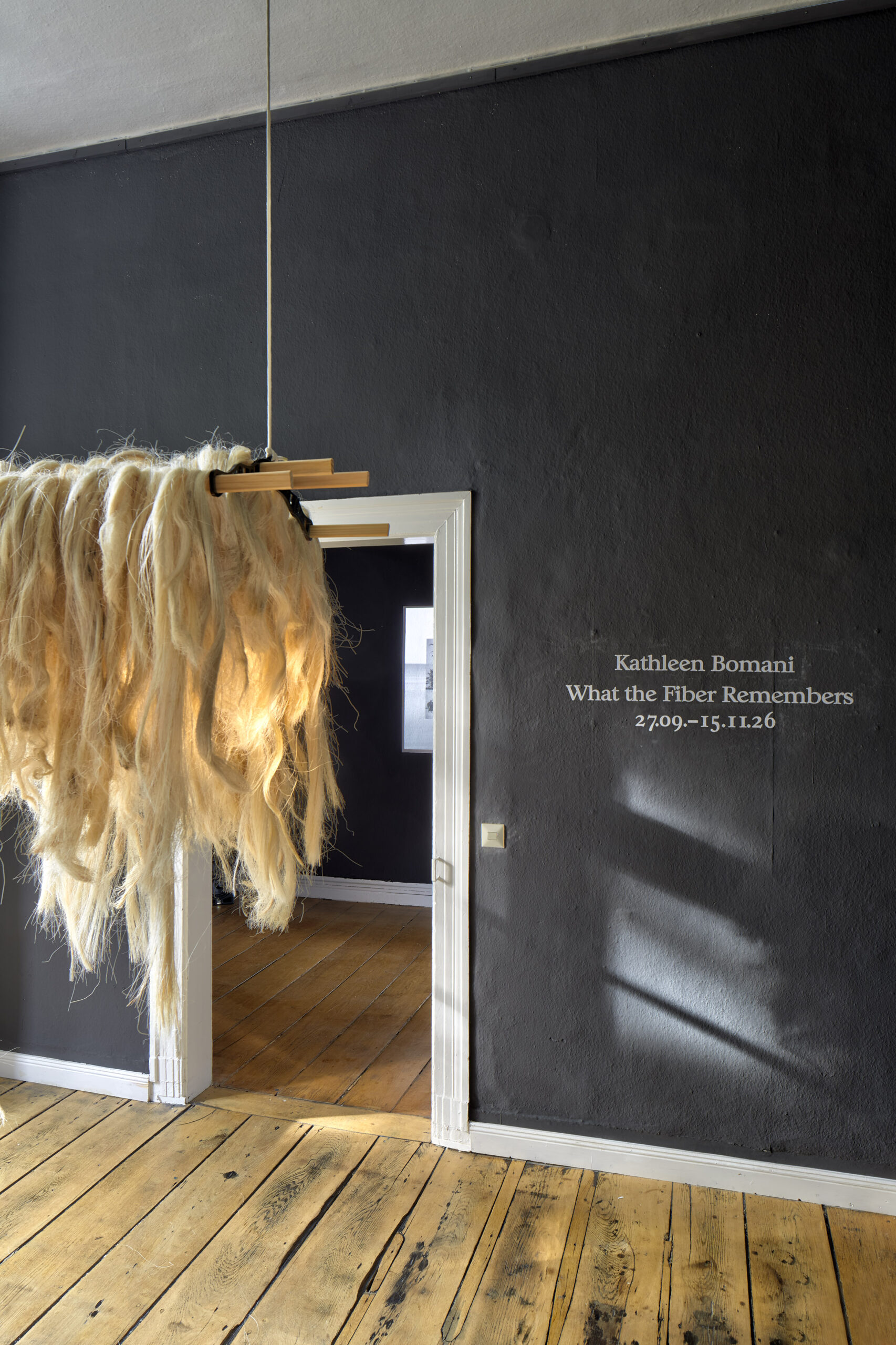
In “Lebensraum” (2024), raw sisal fibres hang from historic, ceiling-mounted victorian drying racks. A material shaped by colonial plantation systems is thus brought into a domestic context where labour, care and memory overlap. The work connects the artist’s childhood memory of sisal laid out to dry along the roadsides of Tanzania with the seemingly neutral presence of the material in German households. What appears in everyday life as a carpet or utilitarian object points towards global histories of raw materials, labour and colonial violence.
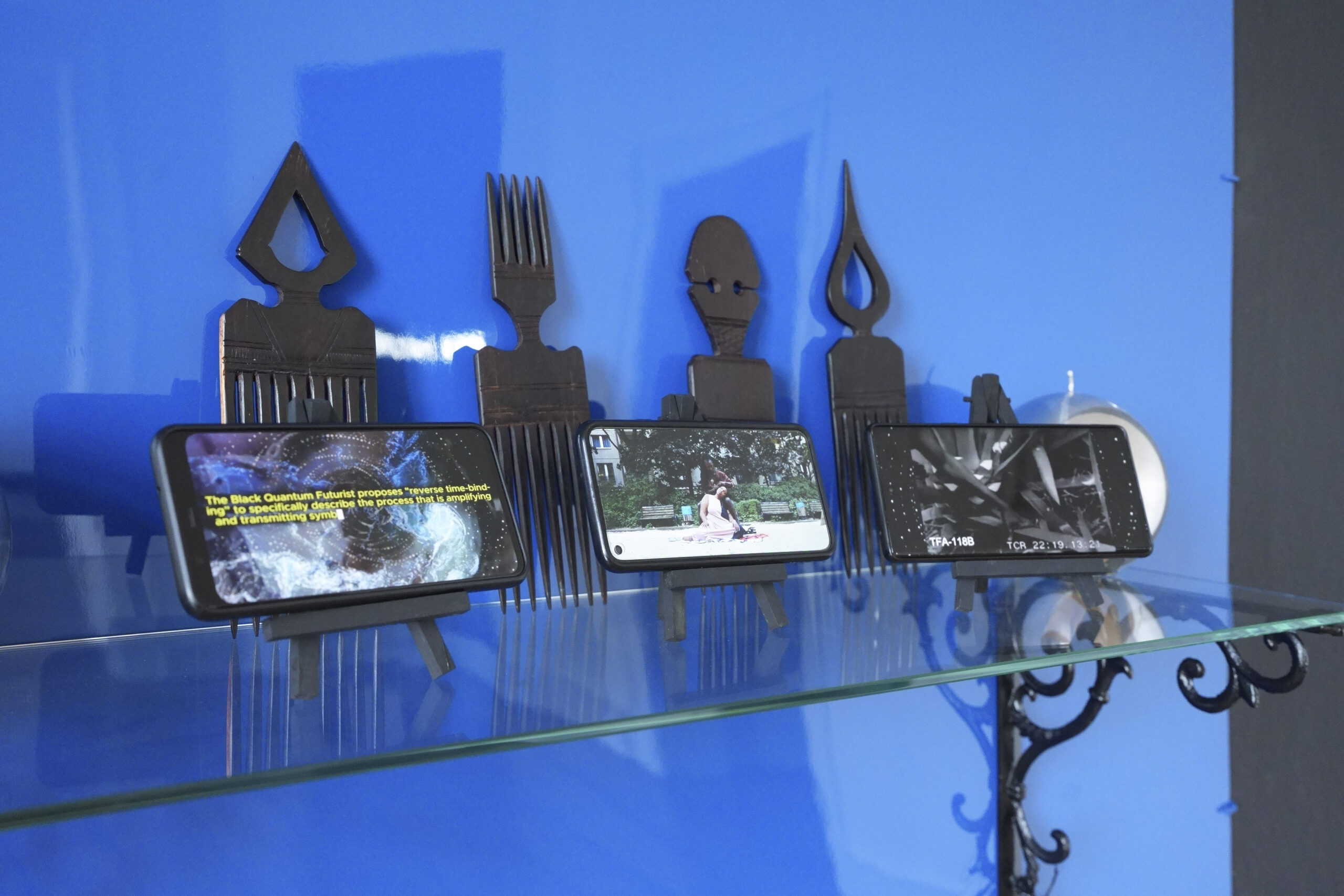
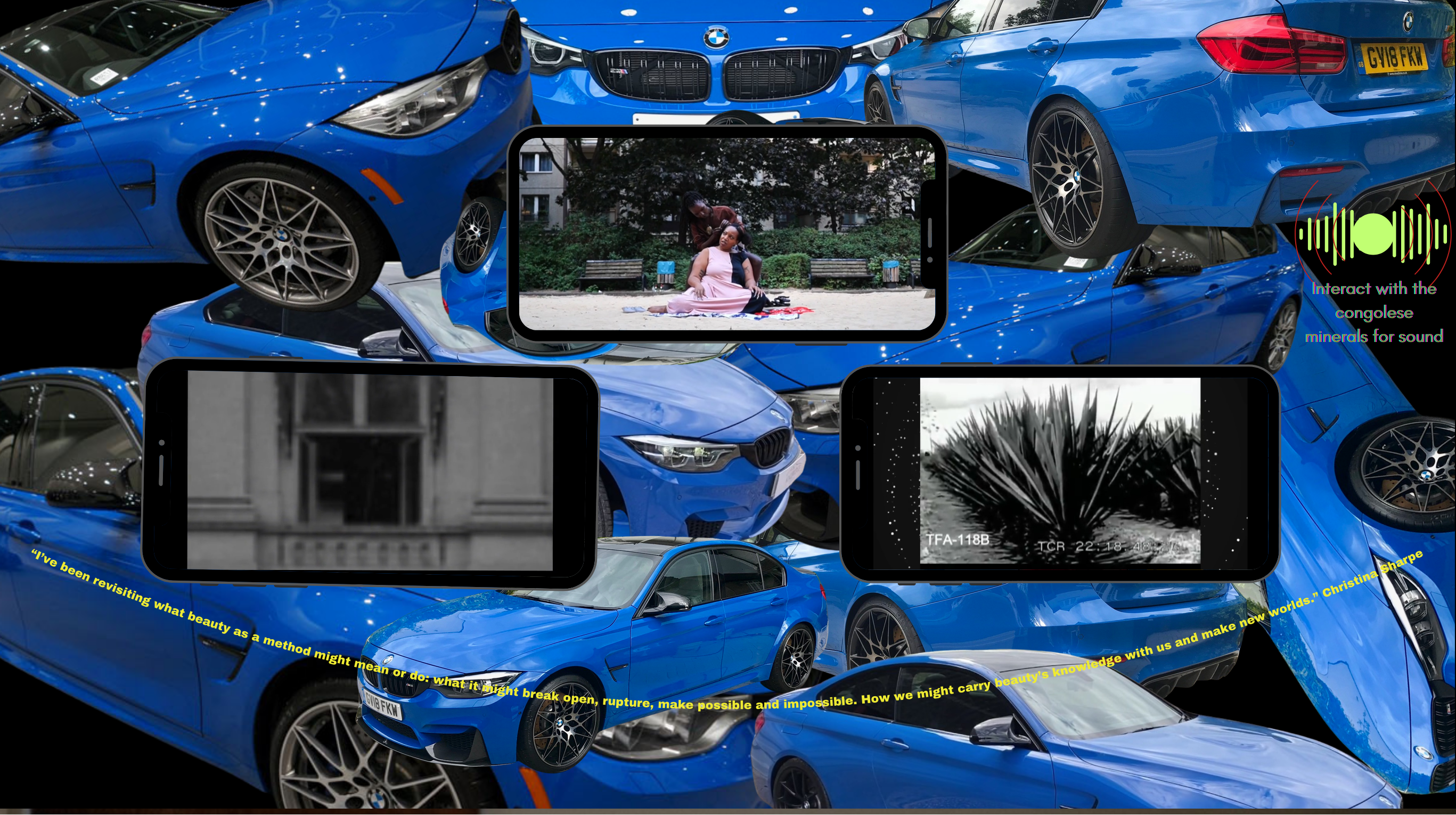
In the video work “In the Wake, My Soul Weeps, My Spirit Restores” (2024), cinematic images, archival traces, scientific imagery and speculative forms of storytelling are woven together. The work follows the violent histories inscribed within the global circulation of sisal while proposing possibilities of return and repair. Images of the plant and its structures encounter the underwater worlds of the cenotes of the Yucatán Peninsula, places understood in Maya cosmology as passages to the world of the dead. Breath, water and the body become central motifs, connecting embodied experience with questions of memory, loss and reconnection.
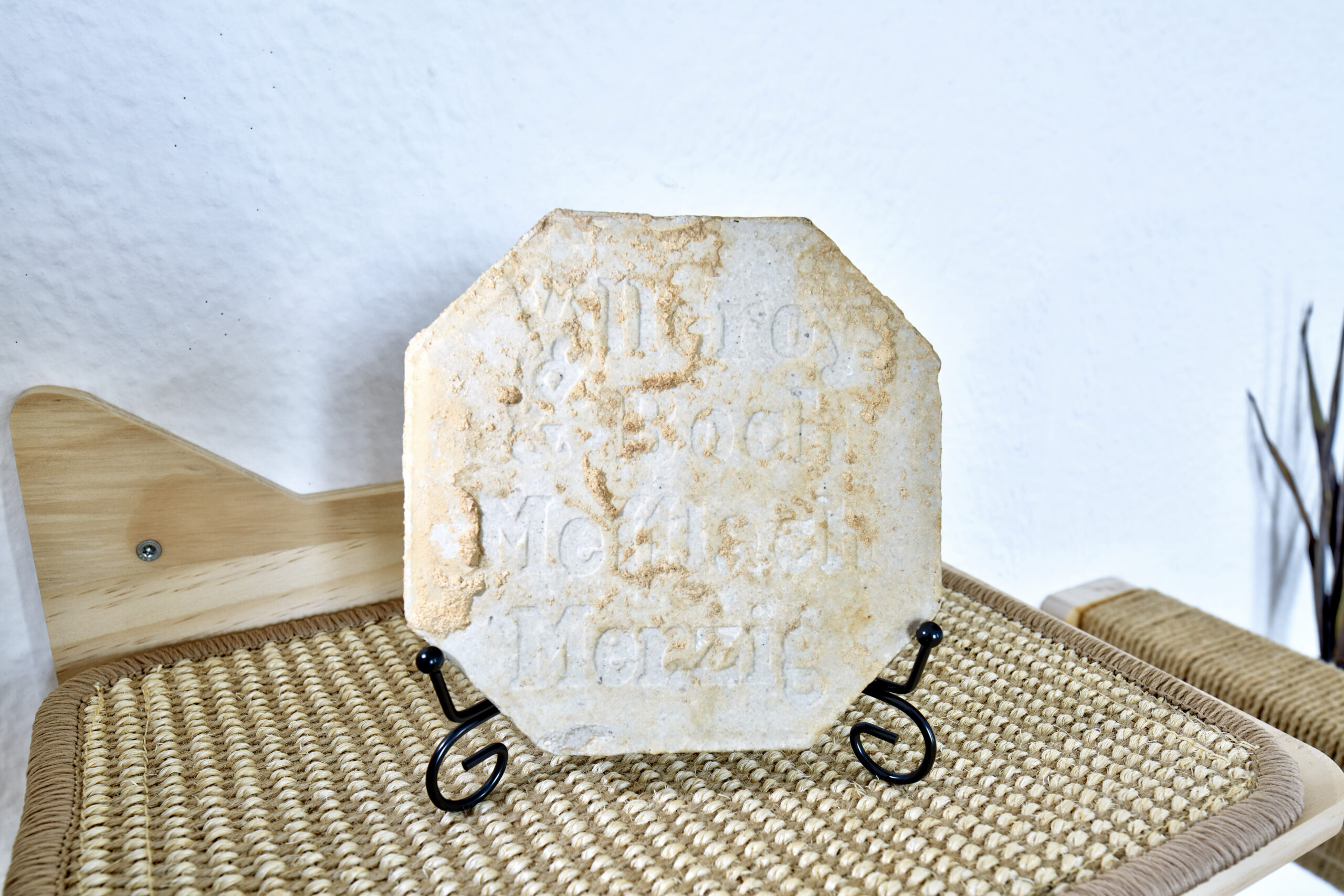
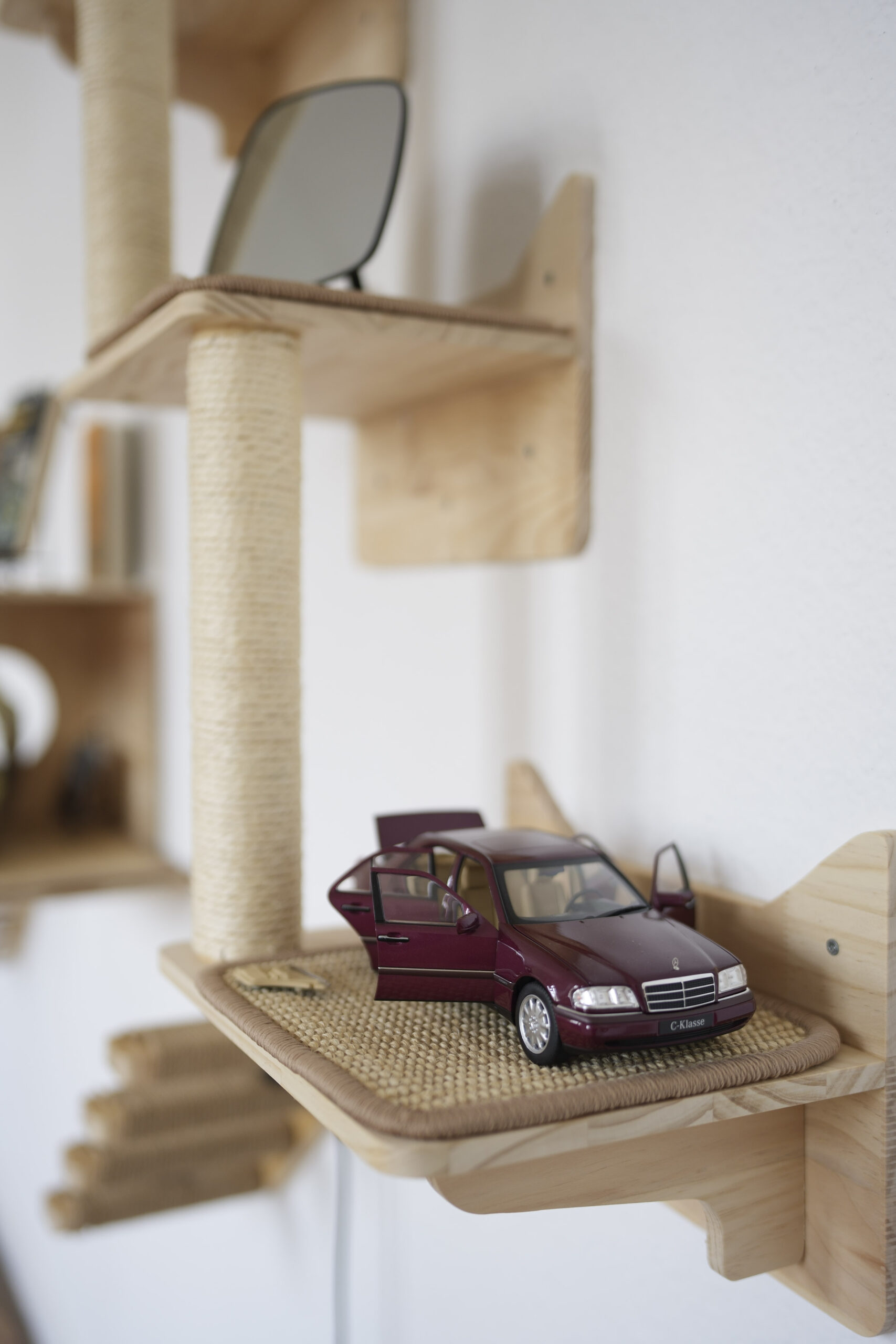
For the exhibition in Arnsberg, Bomani has developed a new wall installation conceived as a climbing archive. Drawing on the ascending architecture of cat furniture, the work brings together archival research, found materials, photographs and objects. The individual elements are arranged on small wooden shelves wrapped in sisal and connected through an accompanying audio guide. The installation’s open, fragmentary structure resists a linear narrative. Instead, connections emerge between images, materials, sounds, and memories, and between what is visible and what remains absent within the gaps of history.
In the installation “Twende Kilioni” (2025), braiding becomes a practice of temporal reorientation. The title, Swahili for “Let us go to the wake”, refers to a braiding pattern whose straight rows recall the geometric ordering of colonially surveyed and partitioned landscapes. In Bomani’s work, however, these lines become mobile: they become connections, detours and possible routes of escape.
In the context of Kunstverein Arnsberg’s annual theme “UMBRUCH – What does it mean to be human?“ the exhibition approaches the question of what it means to be human not as an abstract definition, but as a lived experience within multiple, overlapping transformations. It considers how human lives have long been shaped by economic, colonial and infrastructural systems, and how these conditions continue to persist in materials, landscapes and everyday objects.
The exhibition also asks how we, as human beings, relate to what precedes us and continues to shape us: history, land, materials and the relationships into which we are born. Being human emerges not as a fixed condition, but as a capacity to perceive connections, carry memory forward and negotiate our relationship to the conditions of the present.
Bomani’s works reveal not only traces of violence and loss, but also forms of survival, care and resistance. Memory becomes an active practice: something that can be passed on, transformed and woven into new relations. The story of a plant thus becomes a story of people and their relationships to land, labour and infrastructure.
Kathleen Bomani
Bomani lives and works between Germany, Tanzania and the United States. She studied Spatial Strategies at the Weißensee Academy of Art Berlin. Recent exhibitions and projects include The Fire Last Time, a commissioned film for Haus der Kulturen der Welt (HKW), Berlin (2026); Transmediale, Berlin (2026); DESACTA. Counter-spells to unravel 140 years of the Berlin Conference, SAVVY Contemporary, Berlin (2025–26); Chronoplasticity or How to Eat a Rolex, Raven Row, London (2024); and 93 ’TIL INFINITY, a lecture-performance developed in cooperation with Theater RAMPE and Akademie Schloss Solitude, Stuttgart (2024), examining overlooked histories of Agave sisalana and its discreet presence in German Altbau stairwells.
Kathleen Bomani, Video still : In the Wake, My Soul Weeps, My Spirit Restores 2024
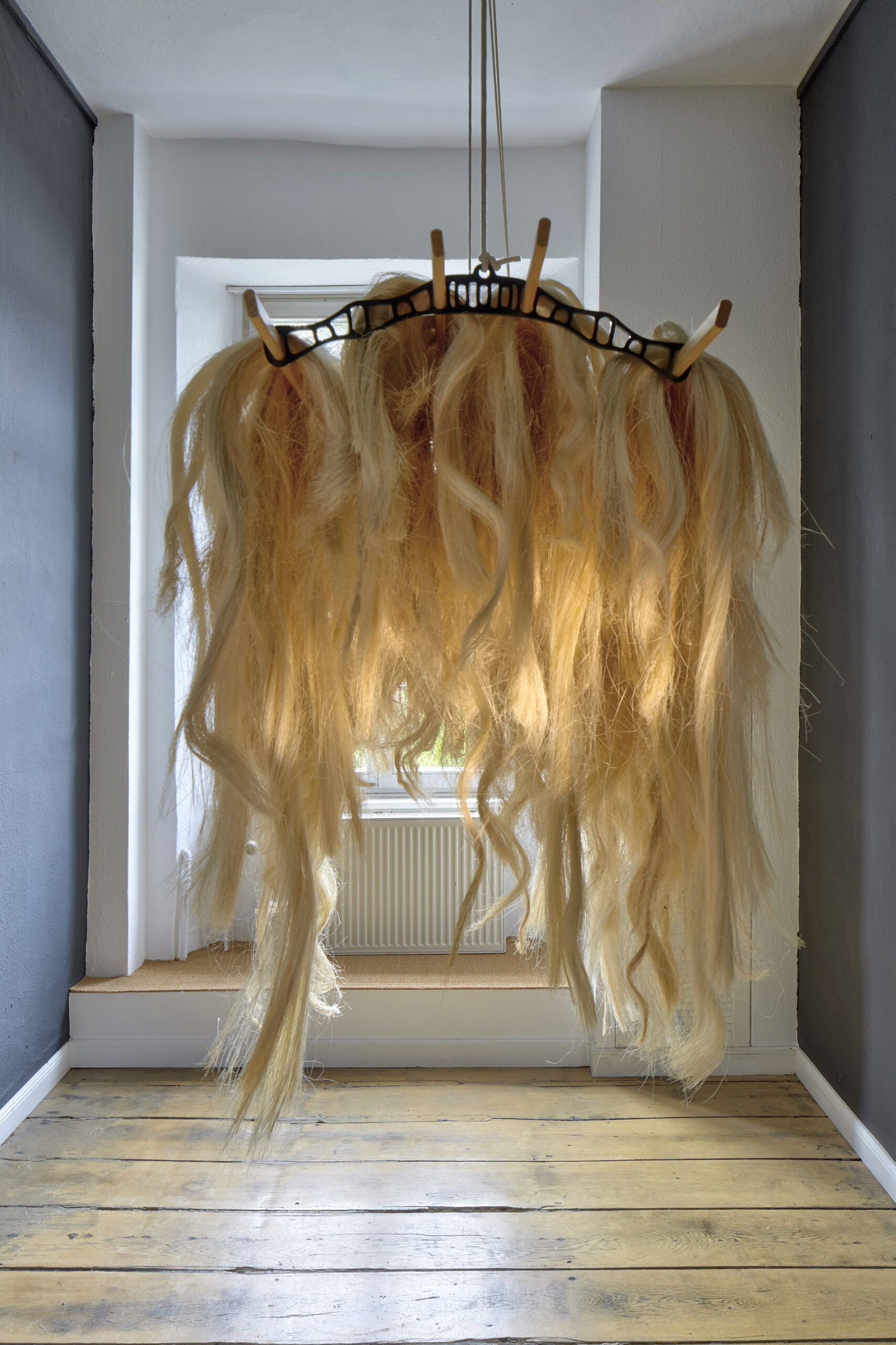
Kathleen Bomani, Lebensraum, photocredit: Michel Ptasinski